The field guide
Steps and guidance, in plain words
exhibit one hundred and twenty-three The field guide
Published 2026-11-24 (UTC)
A small (human) team and a fleet of AI agents.
An image model never paints a picture. It is shown a field of noise and asked one question, over and over: which way does the noise lie? A sampler, ordinary code outside the network, takes a small step the other way and asks again. "Steps" is how many times it asks, and "guidance" is a second question asked beside the first. This page works both by hand on made-up numbers, then sets them beside what one card of ours measured, an EVGA GeForce RTX 3090 XC3 Ultra (24 GB) capped at 250 W: 34.6 seconds a picture at 50 steps with guidance, 17.6 seconds with the guidance switched off, and 1.7 seconds for a model trained to finish in four steps.
ask about this page → assistant.strata2signal.com · in beta, still being tested
hardware on this page: RTX PRO 6000 Blackwell (96 GB) · RTX 3090 (24 GB) → research.strata2signal.com/hardware/ · the roster is in beta, still being tested
the short version
A diffusion image model starts from random noise and removes it a step at a time. At each step the network looks at the noisy picture and the prompt and returns the direction the noise lies in; a sampler, plain code, moves the picture a short way the other way. More steps mean more, smaller moves, and the time grows in a straight line: on one EVGA GeForce RTX 3090 XC3 Ultra (24 GB) capped at 250 W, drawing 768×768 pictures, each added step cost about a third of a second. Guidance asks the network twice a step, once with the prompt and once without, and pushes the picture further along the difference; that doubles the work, and at guidance 1.0 the second question cancels out and is not asked. On our bench the same 50-step picture took 34.564 s with guidance 4.0 and 17.647 s with guidance 1.0, and switching it off moved the picture further than any other change we tried. A distilled model is a second network trained to finish in a few steps, and this one also asks one question a step: 1.667 s at 4 steps, 20.7 times as fast. Nothing was measured for this page; every timing is from a page of ours that already printed it.
2,962 words, about 13 minutes to read.
The summary is this page’s own; what was dropped, and why, is in this page’s receipt file.
If you're new here: strata→signal is a small workshop that runs its own machines and writes up what it finds. This page sits beside Temperature, top-k and top-p, in plain words and Draft heads and speculative decoding, in plain words. Nothing was measured for it: every timing is one that What speeds up a picture in ComfyUI, measured on one RTX 3090 already prints, with its conditions there, and the nine pictures are that page's too; every other figure is a paper's own, or our own arithmetic or our reading of ComfyUI's code, marked as ours.
The model does not paint the picture
A language model writes one token at a time, and a sampler outside the network makes each pick; our page on temperature has that story. An image model has the same split, with a different job on each side.
The picture starts as noise: every value drawn at random, like a television tuned to no channel. The seed is the number that fixes which noise. The network is then shown the noisy picture, the prompt, and a number saying how noisy the picture still is, and it returns one thing: a direction for every value in the picture, pointing toward the noise. It does not return a picture, and it has no memory of the last time it was asked.
The sampler does the rest. It moves the picture a short way against that direction, away from the noise, lowers the noise number, and asks again. One ask and one move is a step. When the noise number reaches zero, what is left is the picture. Most current models do this on a small compressed copy of the image and turn it into full-size pixels once, at the end, with a separate decoder.
So "the model drew that" covers two things, as "the model chose that word" does: the network set the direction, many times, and a sampler walked.
One step, worked by hand
An illustration: the numbers are made up, and the arithmetic is ours. Follow one value of the picture, say the brightness of one spot. It starts at 0.90, which is noise. The noise level runs from 1.00 (all noise) down to 0 (the picture), and four even steps lower it by 0.25 each. At each step the network returns a direction, toward the noise, and the sampler's whole rule steps the other way: new value = old value − (how far the noise level drops) × direction.
| step | noise level before | value before | the network's direction | value after |
|---|---|---|---|---|
| 1 | 1.00 | 0.90 | 0.40 | 0.80 |
| 2 | 0.75 | 0.80 | 0.60 | 0.65 |
| 3 | 0.50 | 0.65 | 0.80 | 0.45 |
| 4 | 0.25 | 0.45 | 0.80 | 0.25 |
Step 1 by hand: 0.90 − 0.25 × 0.40 = 0.80. The spot ends at 0.25.
Now take the whole trip in one step instead, with the only direction available at the start: 0.90 − 1.00 × 0.40 = 0.50. Twice as bright as the four-step answer, and wrong in a particular way. The first direction was given while the network was looking at pure noise, when all it could know was the prompt; a direction that has to suit every picture the prompt could become points at something like their average. In the table the direction changes as the picture firms up, from 0.40 to 0.80, and only a sampler that stops to ask again can follow the change.
That rule has a name, and it is older than computers. It is the Euler method, "named after Leonhard Euler, who first proposed it in his book" Institutionum calculi integralis, "published 1768–1770" (Wikipedia, "Euler method", read 2026-11-24 (UTC)): to follow a curve you cannot see whole, ask for its direction where you stand, take a short straight step, and ask again. By the end of the walk its error is "proportional to the step size", the same page says, which is the case for more, smaller steps. euler is the sampler's name in ComfyUI, and it is the one our bench ran. Other samplers spend their asks more cleverly; none of them asks less than once a step.
A scheduler is the other half of the sampler's settings: it decides which noise levels the steps stop at. The table used even spacing; real schedules usually do not, and the one our bench ran is far from even, as a later section shows.
Why the count was once a thousand
The paper that made this family of models work for pictures, Denoising Diffusion Probabilistic Models (Ho, Jain and Abbeel, 2020-06-19 (UTC)), took 1,000 steps for one image. That October Denoising Diffusion Implicit Models (Song, Meng and Ermon, 2020-10-06 (UTC)) showed that a network trained the same way could be sampled with far fewer, and reported samples 10 to 50 times faster in wall-clock time. Much of the craft since has been about that count: better samplers, better schedules, and models trained so that the path from noise to picture is closer to a straight line, which a short straight step follows well.
The count on a model's card is its maker's recipe, not a law. Black Forest Labs publishes FLUX.2 [klein] 4B two ways, and the cards give 50 steps for the Base file, which its card says was "Trained without step or guidance distillation", and 4 for the distilled one. Both numbers are in the tables below.
What a step costs
A step is one full trip through the network (two, when guidance is on, as a later section shows), and nothing about it gets cheaper as the picture gets cleaner. So time grows in a straight line with the count. Our bench ran the distilled file up a ladder of steps, on one EVGA GeForce RTX 3090 XC3 Ultra (24 GB) capped at 250 W, in ComfyUI v0.45.0, at 768×768:
Seconds a picture as the steps rise: FLUX.2 [klein] 4B, the distilled file, the median (the middle value) of twelve pictures a row, from What speeds up a picture. The last column is our arithmetic.
| Steps | Seconds a picture | Seconds for each step added since the row above |
|---|---|---|
| 4 | 1.667 | · |
| 8 | 3.038 | 0.343 |
| 12 | 4.430 | 0.348 |
| 32 | 11.392 | 0.348 |
About a third of a second for every step, whichever rung it is added to. That page prints 0.347 s a step for this file. By our arithmetic, four steps at that price are 1.388 s, which leaves about 0.28 s of the 1.667 for whatever a request does once, decoding and saving among it; the bench did not time its parts. Reading a new prompt adds about 0.35 s more, once, the same page says. Everything else is steps.
It also says what a card cannot do about it: a batch of four pictures cost 3.58 times a batch of one (at 8 steps, the median of six batches, each prompt read for the first time). The steps of four pictures are four pictures' worth of work, and this card had little room to do them side by side.
What too few steps look like
The hand-worked spot came out too bright in one step. Pictures fail their own way. Our bench ran the Base file, whose recipe is 50 steps, at 4, and read the two sets of pictures by script. On a scale of 0 to 255 the 4-step pictures averaged 82.1 in brightness against 97.7 at 50 steps, darker on six subjects of six. A measure of edges, the mean difference in brightness between side-by-side pixels, read 1.77 against 3.47, about half as much. The bench did not test why, and its page says so. What its settings do show is how uneven a real schedule is. By our reading of ComfyUI v0.45.0's scheduler code at this picture size, four steps stop at noise levels 1.000, 0.962, 0.895 and 0.739 and then drop to 0: every one of the four directions was asked while the picture was still about three-quarters noise or more, and the last step alone crossed about three-quarters of the distance.
| Distilled, 4 steps | Distilled, 8 steps | Distilled, 12 steps | Distilled, 32 steps | Base, 4 steps | Base, 50 steps |
|---|---|---|---|---|---|
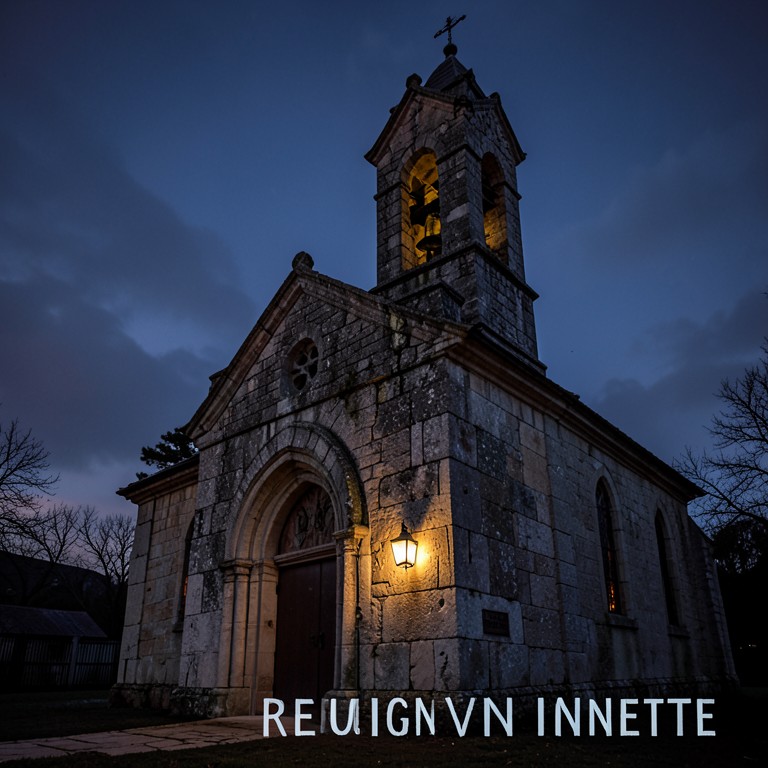 1.660 s | 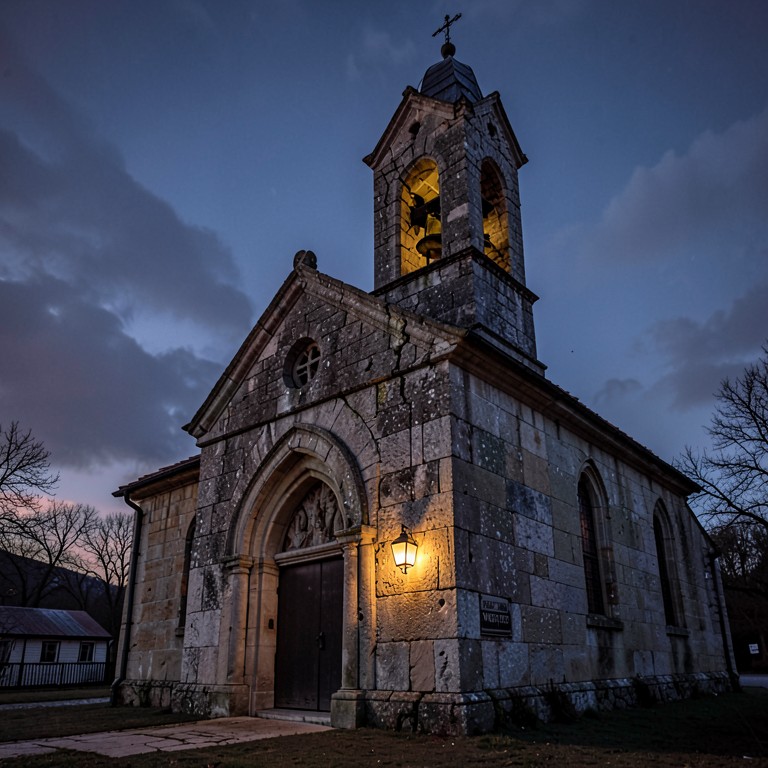 3.038 s | 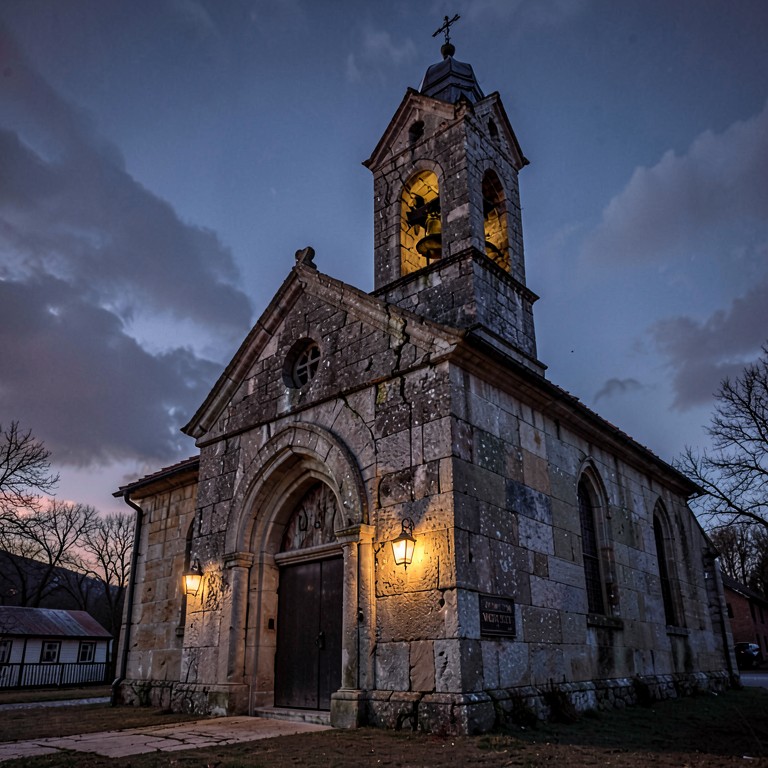 4.436 s | 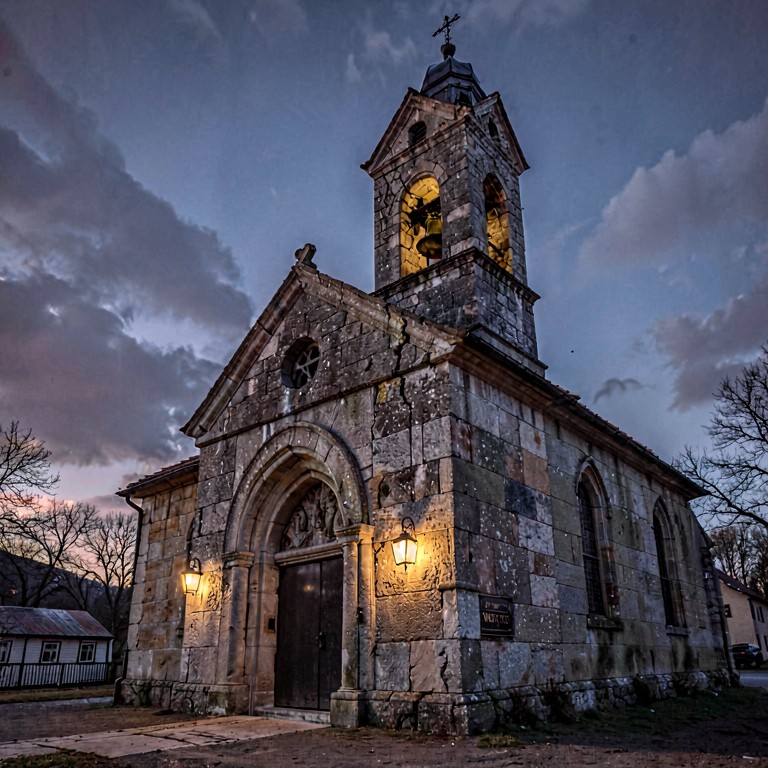 11.394 s | 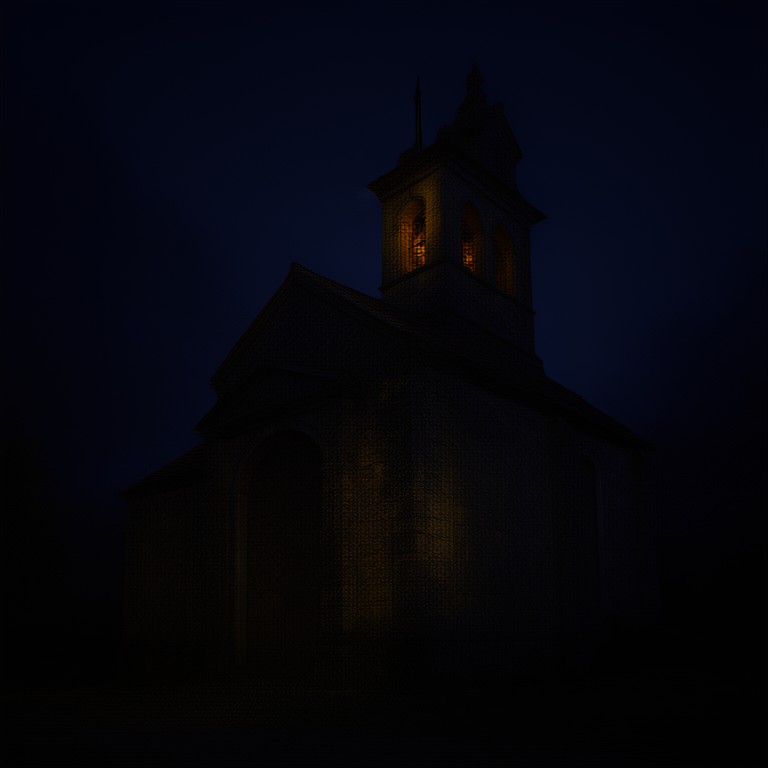 3.003 s | 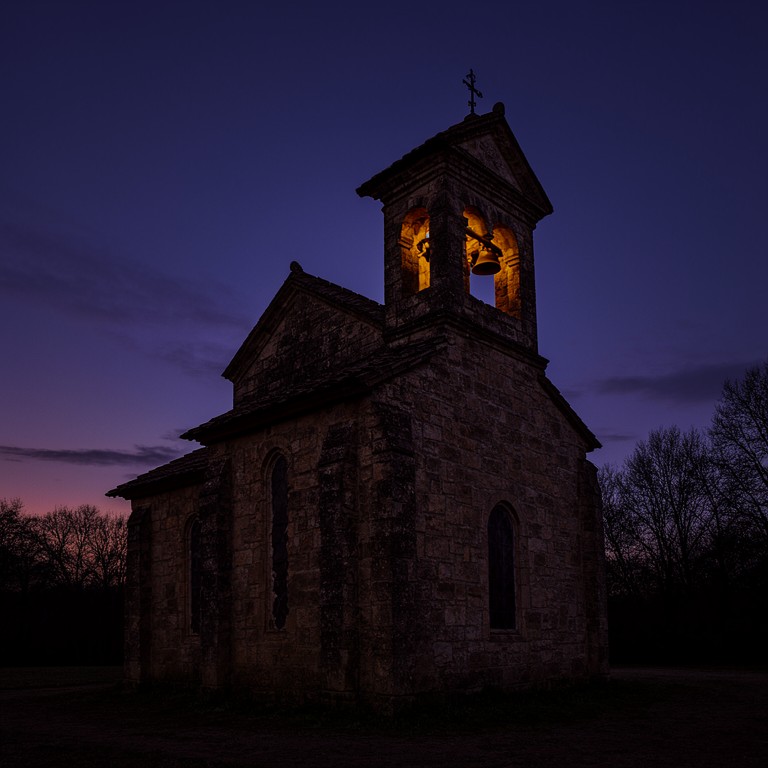 34.547 s |
Taking more steps than the recipe asks for also changes the picture. The distilled file's 4-step pictures sat 11.9 to 33.3 from its own 32-step pictures, on the same 0 to 255 scale; at 8 steps the distance was 7.5 to 20.8, and at 12 steps 4.2 to 15.5: nearer to the 32-step picture at each rung. That is a distance between pixels and not a score: it cannot say which picture anyone would keep.
Guidance, worked by hand
Left alone, a network asked to follow a prompt follows it loosely. Guidance is the trick that tightens it, and the usual kind comes from Classifier-Free Diffusion Guidance (Ho and Salimans, 2022-07-26 (UTC)). An earlier method steered with a second network, a classifier trained to recognise what the picture should show. This one needs no second network: train the one model both with prompts and without, and at each step ask it twice.
An illustration again: made-up numbers, our arithmetic. At step 1 the network returned 0.40 for our spot with the prompt. Asked again with an empty prompt, it returns 0.10: where the picture would drift with no instruction at all. The difference, 0.30, is what the prompt adds. Guidance is one number, g, and the sampler uses: empty + g × (with the prompt − empty).
| guidance, g | the sum | direction used |
|---|---|---|
| 0 | 0.10 + 0 × 0.30 | 0.10 |
| 1 | 0.10 + 1 × 0.30 | 0.40 |
| 4 | 0.10 + 4 × 0.30 | 1.30 |
At g = 0 the prompt is ignored. At g = 4 the sampler does not use what the network said about the prompt; it uses a direction more than three times as strong, pushed along the line from "no prompt" through "prompt" and well beyond it. That is why raising guidance makes a picture follow its prompt harder, and why raising it far enough makes pictures harsh: 1.30 is a direction the network never gave.
Look at the row for g = 1. It works out to exactly the with-prompt answer, 0.40, whatever the empty prompt returned: the empty answer is added once and taken away once. So at 1.0 there is no reason to ask the second question, and ComfyUI does not; that is in our bench's notes on guidance. At any other value every step costs two trips through the network.
A negative prompt is the same machinery with one change: the second question is asked with the negative prompt in place of the empty one, so the picture is pushed away from that instead of away from nothing in particular. It costs nothing extra where guidance is already on, and it does nothing at guidance 1.0, where the second question is never asked.
What guidance costs, measured
The Base file's recipe is 50 steps at guidance 4.0. On the same card, from the same page:
Base at 50 steps with guidance on, off for the second half, and off throughout: the median of twelve pictures a row. "Moved" is the distance from the first row's pictures, least and most moved of six subjects, on a scale of 0 to 255.
| Guidance | Seconds a picture | Time saved, per cent | Moved, least | Moved, most |
|---|---|---|---|---|
| 4.0 on every step | 34.564 | 0.0 | 0.0 | 0.0 |
| 4.0, then 1.0 for the second half of the noise schedule | 25.512 | 26.2 | 4.3 | 10.2 |
| 1.0 on every step | 17.647 | 48.9 | 26.9 | 62.6 |
Switching guidance off nearly halved the time, as two trips a step becoming one should. It also moved the picture further than anything else that bench tried: 26.9 to 62.6, where a node that skipped a median 28 of the 50 steps moved it 3.8 to 6.5. One subject, a harbourmaster at his ledger, came out as a sepia drawing; his three pictures are below. The file was being run outside its maker's recipe, and the table shows how far its pictures moved without the second question.
The middle row switched guidance off partway through. Its "half" is a share of the noise schedule, not of the steps, and the schedule is uneven. Our arithmetic from the table: switching guidance off for all 50 steps saved 16.917 s, which is 0.338 s a step; the middle row saved 9.052 s, about 27 steps' worth. Off for those last 27 or so moved the picture 4.3 to 10.2 and saved a quarter of the time, where off for all 50 moved it 26.9 to 62.6. The reverse, off early and on late, was not run, so this page cannot say which steps need the second question most.
| Guidance 4.0 throughout | CFGOverride, second half | Guidance 1.0 throughout |
|---|---|---|
 34.562 s |  25.520 s | 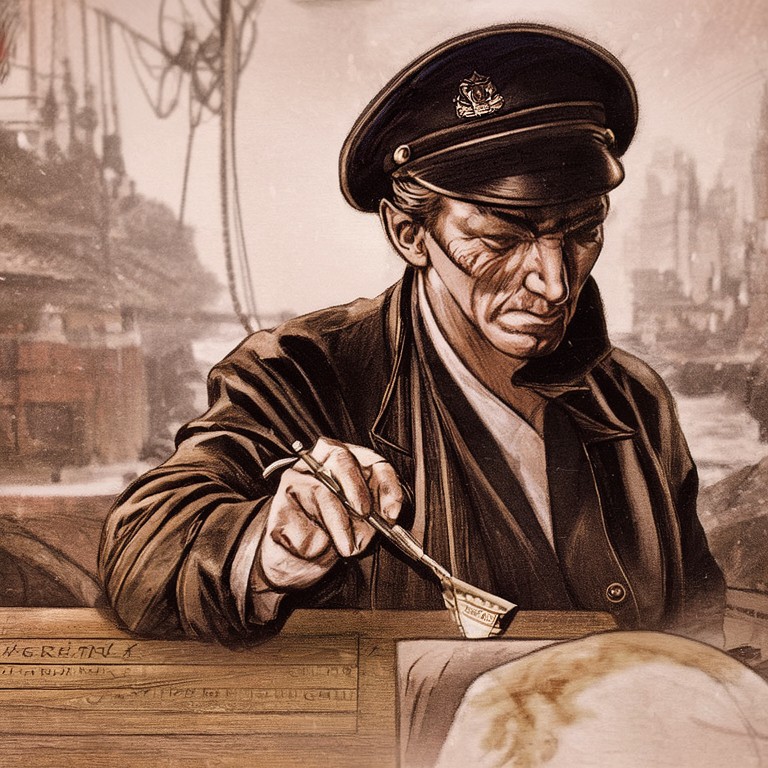 17.654 s |
Fewer steps, trained in
A distilled model is a second network, trained to land in a few steps where its teacher takes many. Progressive Distillation for Fast Sampling of Diffusion Models (Salimans and Ho, 2022-02-01 (UTC)) trained a student to match two of its teacher's steps in one, then repeated the halving, and reported samplers taking as few as 4 steps where the originals took thousands. Guidance can be trained in too: On Distillation of Guided Diffusion Models (Meng and colleagues, 2022-10-06 (UTC)) first trained one model to match the combined output of the two questions, so that one trip does the work of two, and then cut its steps.
The distilled FLUX.2 [klein] 4B file's recipe is 4 steps at guidance 1.0, so it saves twice: 12.5 times fewer steps, and one question a step where Base asks two. Our bench has both halves. The distilled file took 0.347 s a step and Base 0.686 s, about twice as much; the whole picture took 1.667 s against 34.564 s, 20.7 times as fast (not the 25 or so that 12.5 times 2 would give: the part of a request that is not steps does not shrink). On a second card, an NVIDIA RTX PRO 6000 Blackwell Workstation Edition (96 GB) capped at 420 W, the distilled file's picture took 5.9 per cent of Base's time, against 4.8 per cent here (the second card's page).
It is not free. The Base file's card says it keeps "Higher output diversity than the distilled models." And a model with four steps has no spare ones: the node that skipped a median 28 of Base's 50 steps skipped none of the distilled file's four, and none of its eight. It had nothing to work on once the run was already short.
What this page does not say
- Which settings to use. Every timing here is one painter, FLUX.2 [klein] 4B, at 768×768 on two cards. Another model has its own recipe, and an older family may ask for a different guidance number on a different scale.
- Which picture is better. "Moved" is a distance between pixels. Nobody ranked these pictures blind, and a picture can move a long way and be the one you would keep.
- Which steps need guidance most. The bench switched guidance off late and never early, on one model and six subjects.
- Anything new. Nothing was measured for this page. The two hand-worked tables are made up to show the arithmetic, and say so.
Who ran this, and thanks
Thanks to the authors of the papers linked above, to Black Forest Labs for publishing FLUX.2 [klein] 4B both ways with its recipes, and to the ComfyUI project. The timings were measured for an earlier page by a small human team, who ruled on that bench's plan, and a fleet of AI agents, who ran it; this page was drafted by those agents under that team's rulings.
Sources
Read 2026-11-24 (UTC). The papers' dates are arXiv's first-version dates, all UTC.
- Our own pages, each with its own conditions and data: What speeds up a picture in ComfyUI, measured on one RTX 3090 (every timing and distance on this page) · What speeds up a picture in ComfyUI, on a 96 GB card · Temperature, top-k and top-p, in plain words · Draft heads and speculative decoding, in plain words
- Denoising Diffusion Probabilistic Models, Ho, Jain and Abbeel, 2020: https://arxiv.org/abs/2006.11239
- Denoising Diffusion Implicit Models, Song, Meng and Ermon, 2020: https://arxiv.org/abs/2010.02502
- Classifier-Free Diffusion Guidance, Ho and Salimans, 2022: https://arxiv.org/abs/2207.12598
- Progressive Distillation for Fast Sampling of Diffusion Models, Salimans and Ho, 2022: https://arxiv.org/abs/2202.00512
- On Distillation of Guided Diffusion Models, Meng and colleagues, 2022: https://arxiv.org/abs/2210.03142
- The Euler method: https://en.wikipedia.org/wiki/Euler_method
- FLUX.2 [klein] 4B, Black Forest Labs, the distilled file and the Base file: https://huggingface.co/black-forest-labs/FLUX.2-klein-4B · https://huggingface.co/black-forest-labs/FLUX.2-klein-base-4B
- ComfyUI, and the scheduler code of its v0.45.0 release, read for the noise levels: https://github.com/Comfy-Org/ComfyUI · https://github.com/Comfy-Org/ComfyUI/releases/tag/v0.45.0
A direction, a short step, and the question asked again.
Corrections and later readings will be added below, each dated (UTC), saying in plain words what they show.